Top 12 Secure Alternatives to Gmail for Privacy in 2026
For years, Gmail has been the default email service for millions, offering convenience and a vast ecosystem of integrated tools. However, this convenience comes at a cost to your privacy. Gmail's business model is fundamentally built on analyzing your personal data to fuel its advertising engine, creating significant privacy and security concerns for individuals and businesses alike. If you've ever felt uneasy about your inbox being scanned or your data being monetized, you're not alone. The demand for true email privacy, where your messages remain confidential and under your control, has never been more urgent.
This guide is your comprehensive resource for finding the best alternatives to Gmail that prioritize your security and privacy above all else. We've analyzed 12 of the top hosted email platforms, moving beyond generic feature lists to provide a detailed breakdown of what truly matters: end-to-end encryption, data sovereignty, and business models that serve you, not advertisers. Many of these providers build their entire infrastructure on principles that align with a modern approach to data protection. As you seek better email solutions to protect your privacy, consider the advanced cybersecurity principles that underpin true data security, such as the Zero Trust security model.
In the following sections, you will find detailed reviews for each hosted email service, complete with screenshots, direct links, and clear comparisons of their features, pricing, and ideal use cases. Whether you're a privacy-conscious individual, a small business needing custom domain support, or an enterprise requiring robust security controls, this article will equip you with the information needed to migrate away from Gmail and reclaim your digital privacy.
1. Typewire
Best for: Privacy-conscious individuals and Canadian businesses seeking sovereign, secure email hosting.
For users searching for alternatives to Gmail that prioritize privacy and data sovereignty above all else, Typewire presents a compelling, Canadian-first solution. It distinguishes itself by operating entirely on privately owned infrastructure within a Vancouver data centre, ensuring all user data remains protected under Canadian privacy laws like PIPEDA. This complete independence from third-party cloud providers like AWS or Google Cloud gives Typewire an unparalleled degree of control over security and performance on its hosted platform.
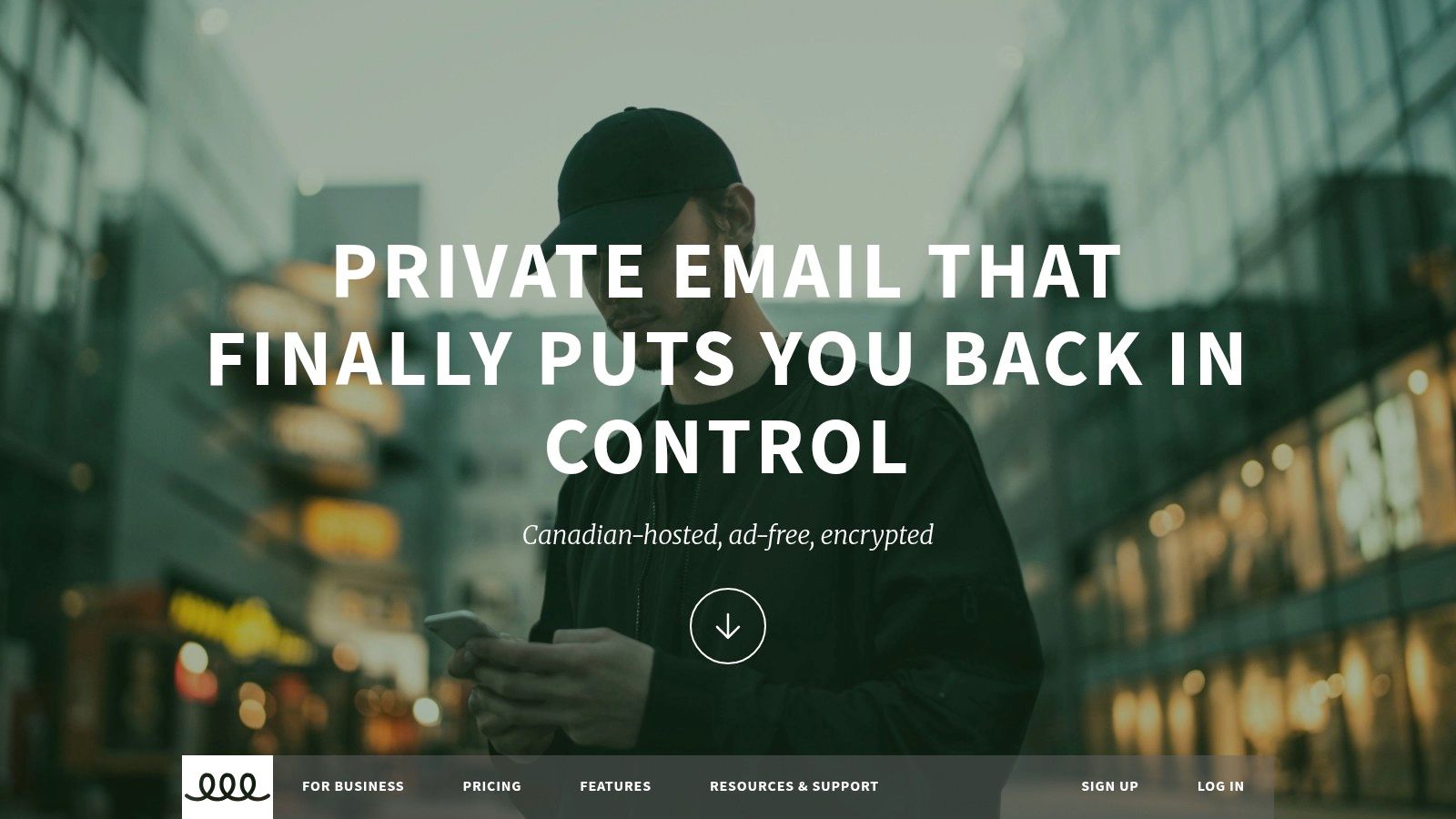
The service is built on a foundation of zero-access encryption, meaning not even Typewire staff can read the content of your messages. This is complemented by default spy-pixel blocking, robust anti-spam and anti-phishing filters, and powerful productivity tools like full-text search and custom aliases. For businesses, Typewire scales effectively with features such as centralized user management, guided domain migration, and support for up to five custom domains on premium plans, making it an excellent choice for SMBs seeking a secure hosted email solution.
Standout Features & Considerations
Typewire’s commitment to a clean, user-funded model means no ads, no data mining, and no tracking—ever. It is a focused, secure email platform, not a bundled suite, which appeals to users who want an expert email service without the bloat of an attached office suite or VPN.
Privacy & Security: Zero-access and end-to-end encryption, automatic tracker blocking, and Canadian data residency.
Business Tools: Centralized administration, custom domain support, and enterprise-grade deliverability.
User Experience: Responsive cross-platform apps with real-time notifications and a clean, intuitive interface.
Website: https://typewire.com
2. Proton Mail
Proton Mail is arguably one of the most recognized and mature alternatives to Gmail for those prioritizing email privacy and security. Operating under stringent Swiss privacy laws, it offers a comprehensive, encrypted ecosystem that extends beyond just email. Its foundation is built on end-to-end and zero-access encryption, meaning not even Proton can read your emails or access your files—a core tenet of truly secure communication.
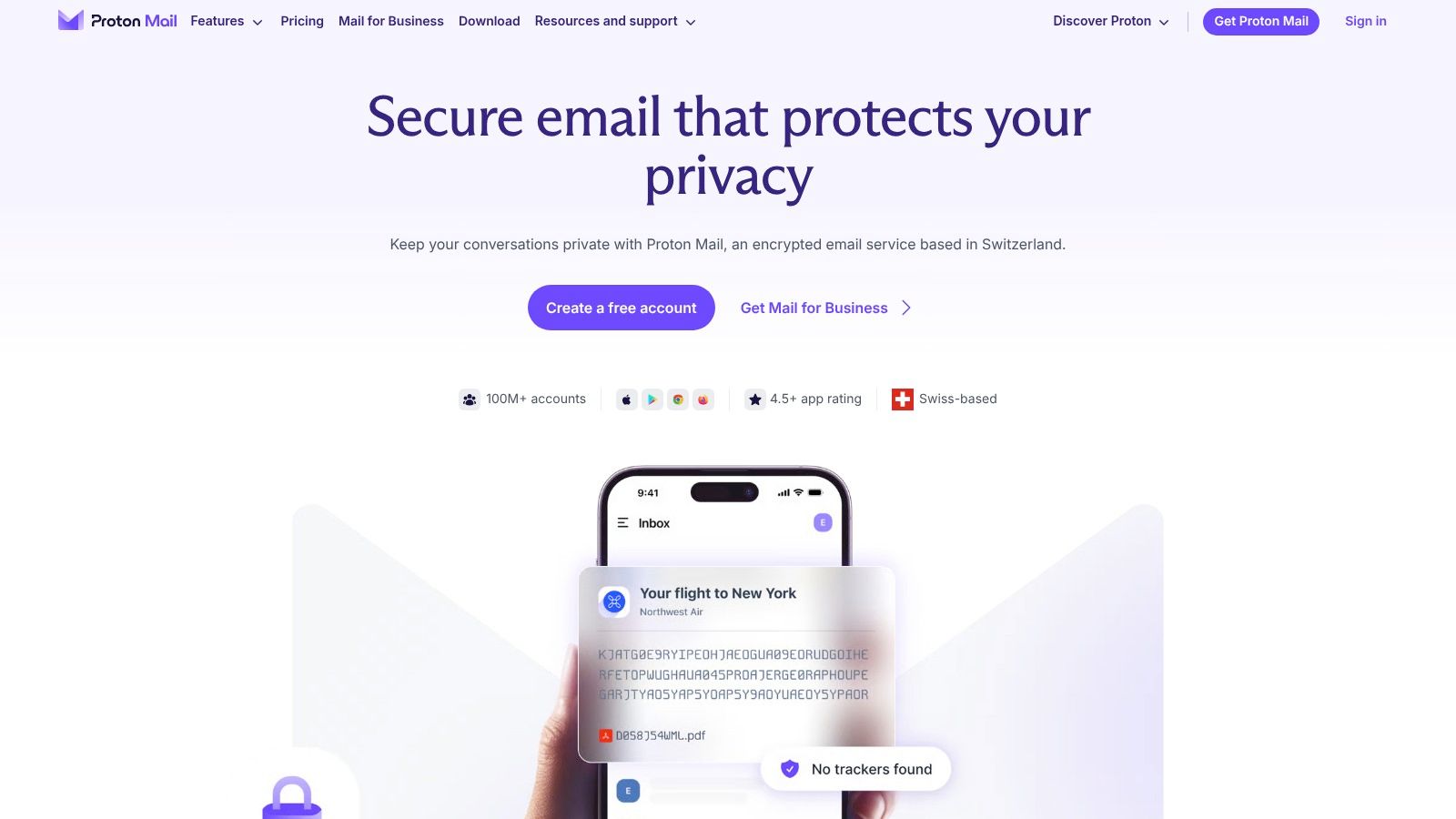
The platform is more than just a hosted email provider; it’s a full productivity suite. A single account provides access to Proton Calendar, Drive, and VPN, with family and business plans available for streamlined user management. This integrated approach makes it an excellent choice for individuals and small businesses seeking to de-Google their entire digital life, not just their inbox. For those curious about the technical underpinnings, you can learn more about what makes an email secure and why these features matter.
Key Details and Use Cases
Best For: Privacy-conscious individuals, journalists, activists, and small to medium-sized businesses needing a secure, all-in-one suite.
Standout Features: End-to-end encryption, open-source clients, and a robust ecosystem (Calendar, Drive, VPN).
Pricing: A free plan with limited storage is available. Paid "Mail Plus" plans start at approximately €4.99/month, offering custom domains, more storage, and additional features. Business plans offer advanced administrative controls.
Migration: The "Easy Switch" tool simplifies importing emails, contacts, and calendars directly from Gmail, making the transition seamless.
Limitation: To use traditional desktop clients like Thunderbird or Outlook, you must use the Proton Mail Bridge application, which is only available on paid plans. This can add a small layer of complexity for some users.
Website: https://proton.me/mail
3. Tuta (formerly Tutanota)
Tuta, formerly known as Tutanota, is a formidable alternative to Gmail that champions an uncompromising approach to privacy and security. Operating from Germany, a country with strong data protection laws, Tuta encrypts your entire mailbox, including contacts and calendars, by default. This commitment to "encryption by default" ensures that all stored data on its hosted servers is inaccessible to anyone but you, positioning it as a leading choice for users seeking maximum confidentiality.
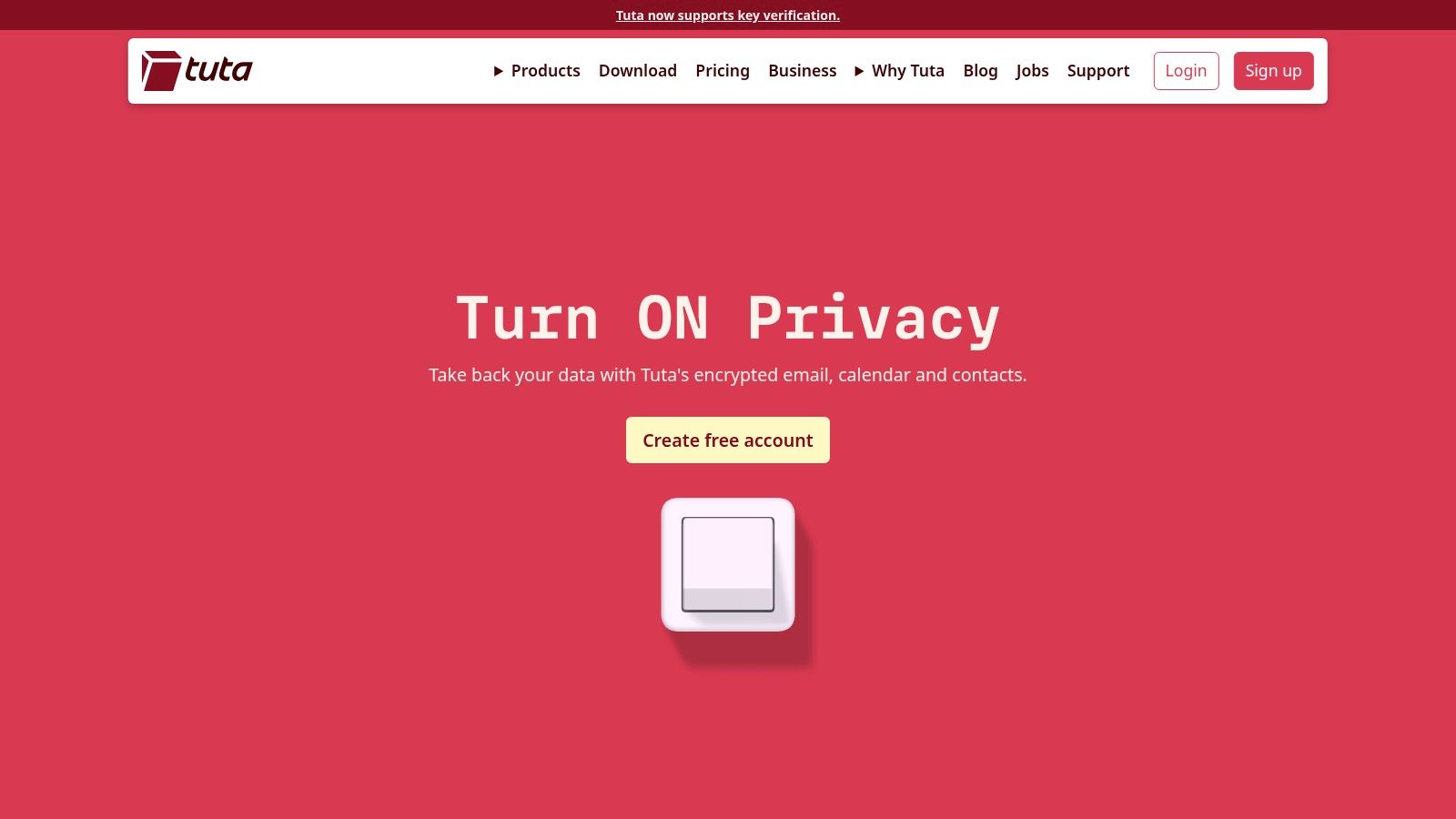
The platform is built on open-source principles and distinguishes itself by being completely tracker-free, a significant departure from Gmail's data-driven model. Tuta provides native desktop and mobile applications for a seamless, secure experience across all devices, complete with offline access. Its focus on post-quantum cryptography also demonstrates a forward-thinking approach to email security, preparing its protocols for future computational threats and solidifying its place as a robust, privacy-first service.
Key Details and Use Cases
Best For: Users and businesses seeking a simple, highly secure, and ad-free email experience with built-in calendar and contact encryption.
Standout Features: Full mailbox encryption (not just email content), open-source clients with zero tracking, and post-quantum secure encryption.
Pricing: A free "Revolutionary" plan is available for personal use. Paid "Legend" plans start at approximately €3/month, offering more storage, custom domains, and unlimited search. Business plans add multi-user support and advanced administration tools.
Migration: Tuta allows importing emails from other services, though the process may require some initial setup through its documentation. It focuses on providing a clean, secure environment from the start.
Limitation: The ecosystem is primarily focused on core email and calendar functions, lacking the broader suite of integrated services (like cloud storage or VPN) that some competitors offer. It also does not support IMAP, requiring users to use its dedicated clients.
Website: https://tuta.com
4. Fastmail
For users who prioritize speed, reliability, and open standards over end-to-end encryption, Fastmail presents itself as one of the most robust alternatives to Gmail. Founded in 1999, this independent, employee-owned hosted email company has built a reputation for its powerful, ad-free experience and excellent support for standard protocols like IMAP, CalDAV, and CardDAV. This makes it an ideal choice for those who prefer using third-party desktop or mobile clients like Thunderbird, Apple Mail, or Fantastical.
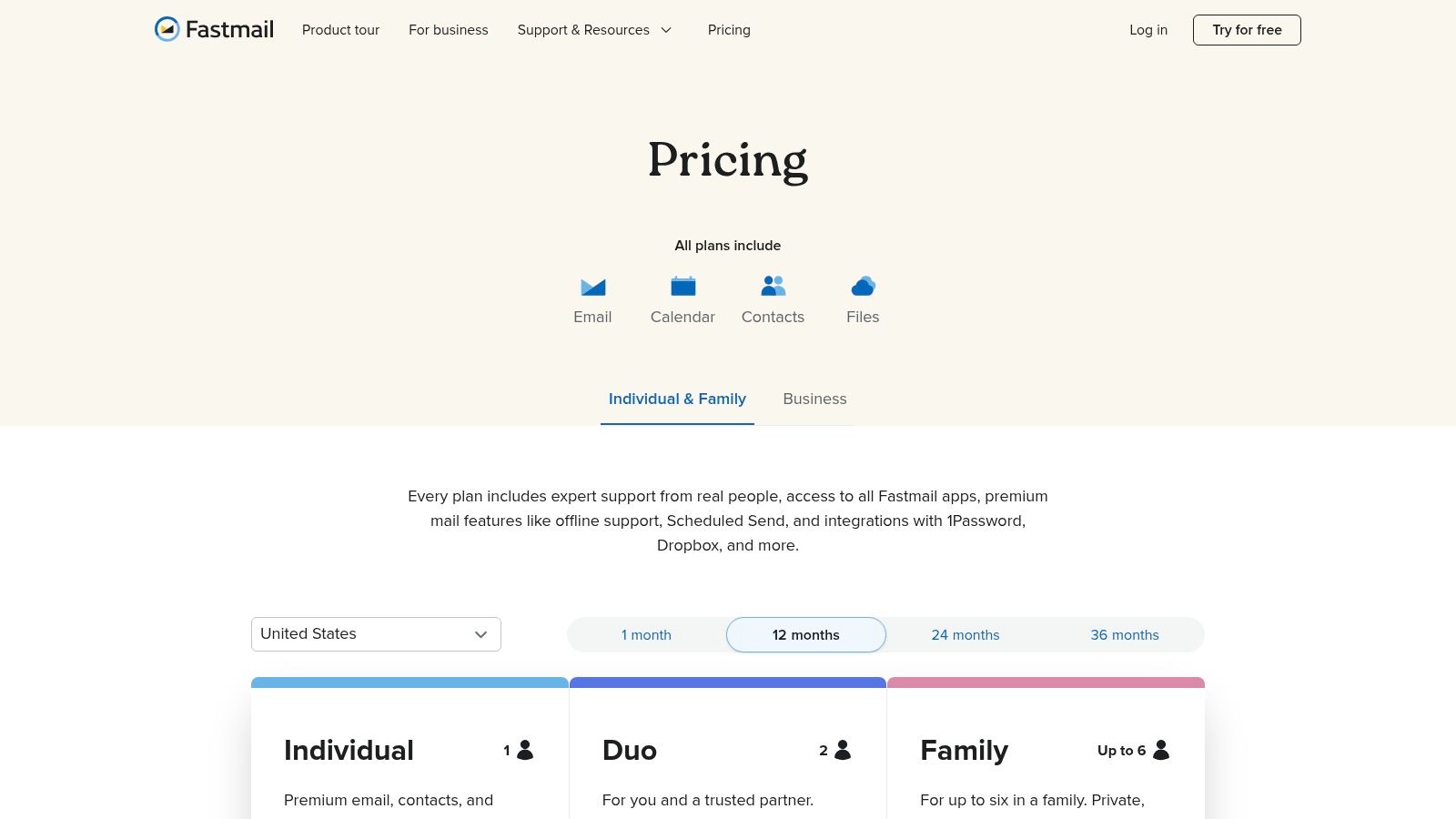
Fastmail's privacy model is based on a transparent, subscription-based business—you are the customer, not the product. Its web interface is famously fast and features powerful tools for organizing your inbox, including advanced search, customizable rules, and snoozing. It also offers excellent support for custom domains, aliases, and catch-all addresses, which are critical for enhancing both privacy and organization. For those interested in maximizing control over their digital identity, Fastmail's domain features are a great starting point, and you can learn how to create a personal email domain to further secure your communications.
Key Details and Use Cases
Best For: Power users, professionals, and anyone who relies heavily on third-party clients and values a fast, reliable, and standards-compliant email service.
Standout Features: Exceptional IMAP/SMTP/CalDAV/CardDAV compatibility, lightning-fast web client and search, Masked Email feature for aliases, and robust custom domain support.
Pricing: No permanent free tier, but a 30-day trial is available. Plans start at approximately $3 USD/month for the Basic plan, with Standard and Professional tiers adding more storage and features.
Migration: Provides an easy-to-use import tool that can pull in emails, contacts, and calendar events directly from Gmail and other providers via IMAP.
Limitation: Fastmail encrypts data at rest on its servers but is not a zero-access, end-to-end encrypted provider like Proton or Tuta. This is a deliberate trade-off to enable its powerful search capabilities and seamless third-party client integration.
Website: https://www.fastmail.com/pricing/
5. StartMail
From the creators of the private search engine Startpage, StartMail is an excellent alternative to Gmail designed with a strong focus on user privacy and spam control. It operates under Dutch jurisdiction, which offers robust privacy protections. The service's philosophy is rooted in providing a simple, secure, and ad-free email experience, making it a strong contender for users looking to reclaim their digital privacy without a steep learning curve.
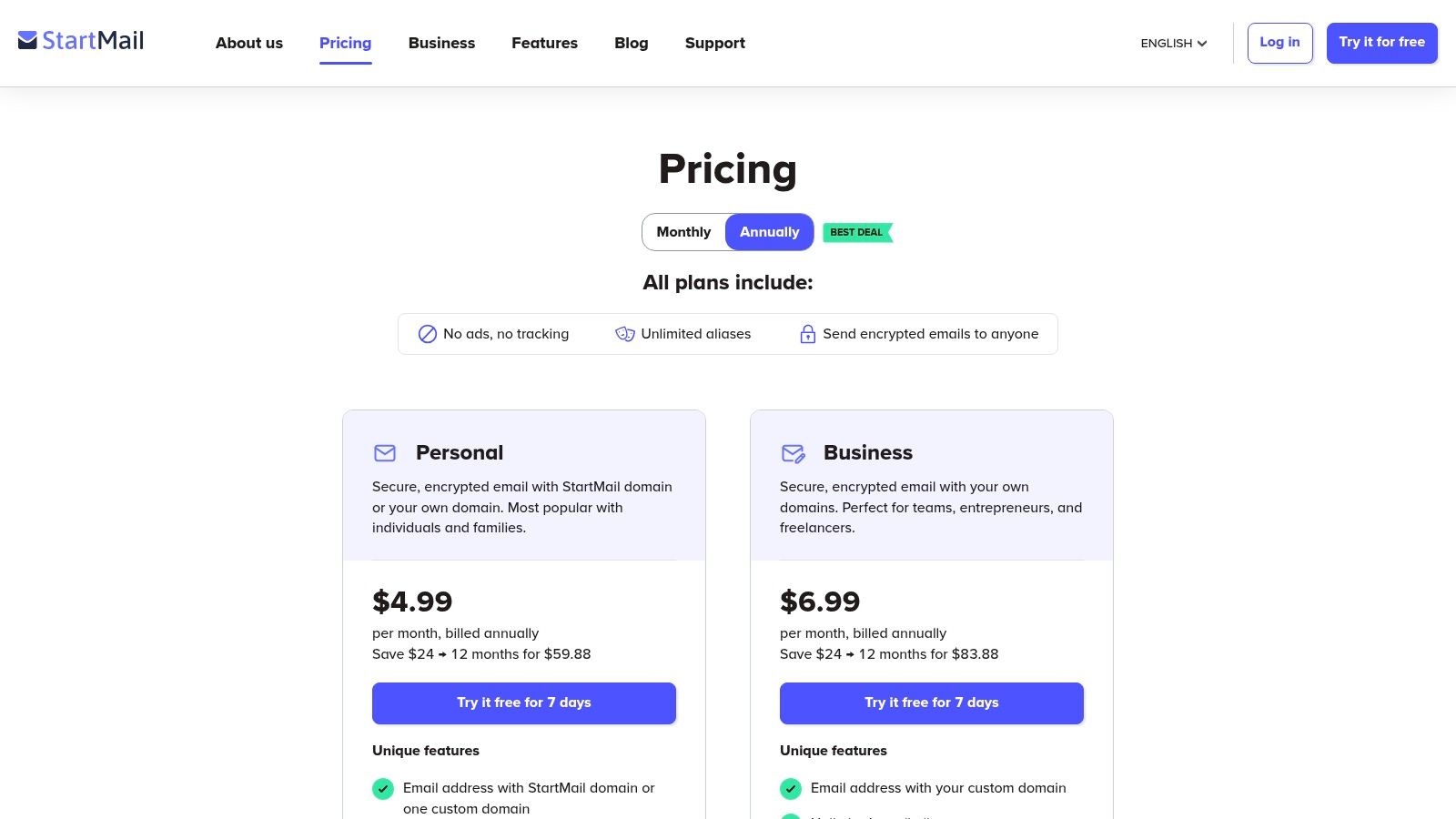
StartMail's most compelling security feature is its powerful and unlimited email alias system. This allows users to create disposable addresses on the fly, protecting their real email from spam, data breaches, and tracking. The platform also makes PGP encryption accessible, allowing you to send encrypted messages to anyone, even if the recipient doesn't use PGP, through a secure, one-time-password-protected inbox. This hosted email solution is ideal for shielding your primary identity.
Key Details and Use Cases
Best For: Individuals who want to aggressively combat spam and protect their primary inbox, and users looking for an easy entry into PGP-encrypted communication.
Standout Features: Unlimited disposable and custom aliases, one-click PGP encryption, and the ability to send encrypted emails to non-users.
Pricing: A 7-day free trial is available. Personal plans start at approximately $59.95 USD per year, offering 20 GB of storage and custom domain support. Business plans offer more storage and administrative tools.
Migration: The service provides a straightforward IMAP-based migration tool to import your existing emails and contacts from services like Gmail.
Limitation: Unlike all-in-one suites, StartMail is laser-focused on email, lacking an integrated calendar or cloud drive. It also does not offer a permanent free plan, requiring a subscription after the trial period.
Website: https://www.startmail.com/pricing
6. mailbox.org
Based in Germany and operating since 1989, mailbox.org is a veteran provider that stands as a strong European alternative to Gmail for those who prioritize data residency and comprehensive features. The entire service is run on servers located in Germany, placing it firmly under the protection of the EU's stringent GDPR privacy regulations. This commitment to security is backed by green energy, offering an ethically and environmentally conscious choice for your hosted email needs.
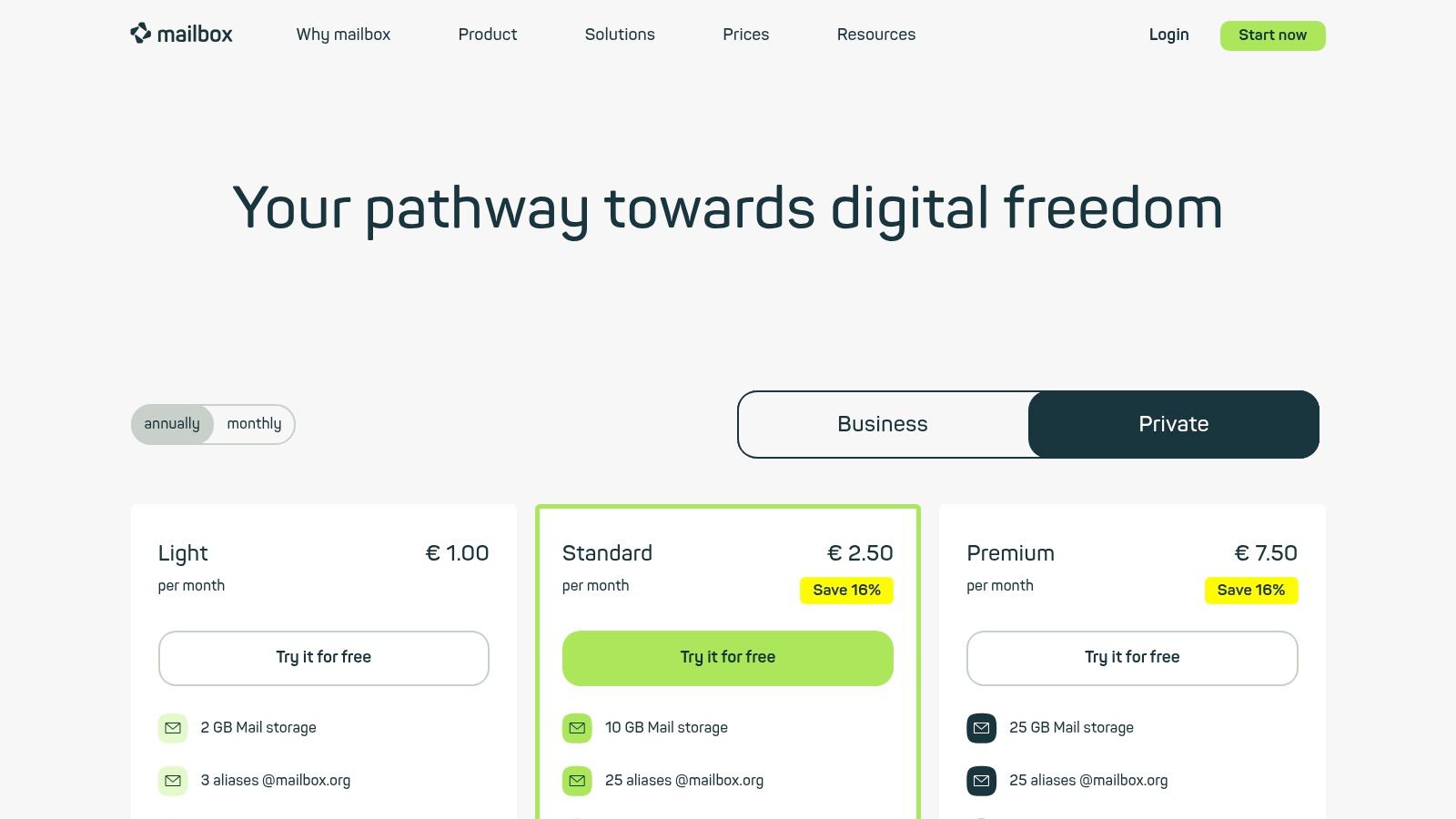
More than just a secure email host, mailbox.org provides a complete groupware suite. Even on its entry-level paid plans, users gain access to a calendar, contacts, tasks, and an online office suite for documents and spreadsheets. This integration makes it a powerful and cost-effective option for individuals, families, and small businesses looking to replace Google's entire productivity ecosystem with a single, privacy-focused solution hosted entirely within the EU.
Key Details and Use Cases
Best For: Individuals, freelancers, and small businesses seeking a GDPR-compliant, all-in-one productivity suite with robust privacy protections.
Standout Features: 100% German-hosted infrastructure, comprehensive groupware tools (calendar, drive, online office), and custom domain support on all paid plans.
Pricing: Starts at €1/month for the "Light" plan. The "Standard" plan at €3/month is a popular choice, offering 10 GB of mail storage, 25 aliases, and custom domain support. A 30-day free trial is available.
Migration: The platform provides a dedicated migration service, "The Audumbla Mail-Shuttle," to help users import their mailbox data from other providers like Gmail.
Limitation: The user interface and mobile apps are highly functional but can feel more utilitarian and less polished than the consumer-focused designs of major tech competitors. Phone support is also reserved for higher-tier business plans.
Website: https://mailbox.org/en/prices/
7. Posteo
Posteo stands out as one of the most ethical and minimalist alternatives to Gmail, focusing on sustainability, affordability, and uncompromising privacy. Based in Germany, it operates under strong data protection laws and is entirely self-financed, ensuring its operations are free from external investor influence. The service is 100% powered by green energy, making it an excellent choice for environmentally conscious users who also demand robust digital privacy.
The platform’s core philosophy is simplicity and security. It offers a clean, ad-free experience with encrypted storage for all your data, including emails, contacts, and calendars. A key differentiator for privacy is its commitment to anonymity; Posteo allows users to sign up without providing any personal information and accepts anonymous cash payments by mail. This approach makes it a powerful tool for those needing a truly private and untraceable hosted email account.
Key Details and Use Cases
Best For: Individuals prioritising anonymity, privacy, and environmental sustainability in a low-cost, straightforward email service.
Standout Features: Anonymous signup and payment options, 100% powered by green energy, comprehensive encryption (storage, transport, and optional end-to-end), and transparent business practices.
Pricing: A simple flat rate of €1/month for the core service (2 GB storage), with affordable à-la-carte upgrades for more storage or calendar aliases. There is no permanent free plan.
Migration: A dedicated migration tool is provided to easily import emails, contacts, and calendars from previous providers, including Gmail.
Limitation: Posteo intentionally does not offer custom domains to protect user privacy, as domain registration data could compromise anonymity. This makes it unsuitable for businesses or users needing a branded email address.
Website: https://posteo.de/en
8. Mailfence
Mailfence is a strong contender among alternatives to Gmail, particularly for users and small businesses based in the EU. Operating from Belgium, it falls under strict European privacy laws, including GDPR, and focuses on delivering an ad-free, secure email experience. The service is built around OpenPGP encryption standards, offering end-to-end encryption that gives users full control over their cryptographic keys and ensures no third party, including Mailfence, can decipher their communications on its hosted platform.
Beyond just email, Mailfence provides an integrated suite with a calendar, contacts, and document storage, aiming to be a complete collaboration tool. This makes it a practical choice for teams seeking a private and secure hub for their daily operations. The platform's commitment to digital rights is also noteworthy, as it only responds to court orders from a Belgian court, providing a clear legal framework for data protection.
Key Details and Use Cases
Best For: Small businesses, families, and individuals in the EU looking for a GDPR-compliant suite with robust encryption and administration tools.
Standout Features: End-to-end encryption with OpenPGP support, digital signatures, and a full collaboration suite (Calendar, Documents, Groups).
Pricing: A free plan with 500 MB of storage is offered. The "Entry" plan starts at €3.50/month, adding custom domain support, while business plans provide advanced administrative and compliance controls.
Migration: Users can import contacts and calendar events. For emails, migration is possible via an external email client like Thunderbird or Outlook, which requires a paid plan for IMAP/SMTP access.
Limitation: The user interface is more functional and utilitarian than aesthetically polished, which may feel dated to some users. Access to IMAP/POP3 and custom domains is restricted to paid tiers.
Website: https://mailfence.com
9. Microsoft Outlook / Microsoft 365
Microsoft Outlook is one of the most mainstream and powerful alternatives to Gmail, particularly for users already embedded in the Windows ecosystem. While the free Outlook.com service is ad-supported and not privacy-focused, its true strength lies in the paid Microsoft 365 plans. These plans transform Outlook into a professional, ad-free hosted email solution powered by the enterprise-grade security and reliability of Microsoft Exchange.
For small to medium-sized businesses, standardizing on Microsoft 365 provides a deeply integrated productivity suite. An account gives you a custom domain email alongside Teams, OneDrive, and the full Office application suite (Word, Excel, etc.). This comprehensive offering appeals to organizations looking for a single, familiar vendor to handle their core communication and collaboration needs, complete with robust administrative controls and strong email security features like advanced threat protection.
Key Details and Use Cases
Best For: Businesses of all sizes, especially those standardizing on the Microsoft ecosystem, and individuals wanting a familiar interface with professional features.
Standout Features: Seamless integration with the full Microsoft Office suite and Teams, advanced Exchange-level security and filtering, and easy user management for organizations. Canadian storefront and CAD pricing are available.
Pricing: A free, ad-supported Outlook.com account is available for personal use. Microsoft 365 Business plans, which include custom domains and Office apps, start from CAD $8.00 user/month.
Migration: Microsoft provides extensive, well-documented tools for migrating mailboxes, contacts, and calendars from Gmail and other platforms, especially for business accounts.
Limitation: Compared to privacy-first providers, Microsoft engages in broader data collection and telemetry across its services. It is a security-focused enterprise platform, but privacy purists may prefer other options.
Website: https://www.microsoft.com/en-ca/microsoft-365/business/with-copilot-plans-and-pricing
10. Zoho Mail / Zoho Workplace
Zoho Mail presents itself as a powerful, business-oriented alternative to Gmail, offering a robust suite of tools that extends far beyond a simple inbox. It is designed for small to medium-sized businesses that need a cost-effective, professional hosted email solution integrated with a full collaboration and productivity platform. While it doesn't lead with zero-access encryption, it provides strong security features, extensive admin controls, and data centers in multiple regions, giving businesses control over data residency.
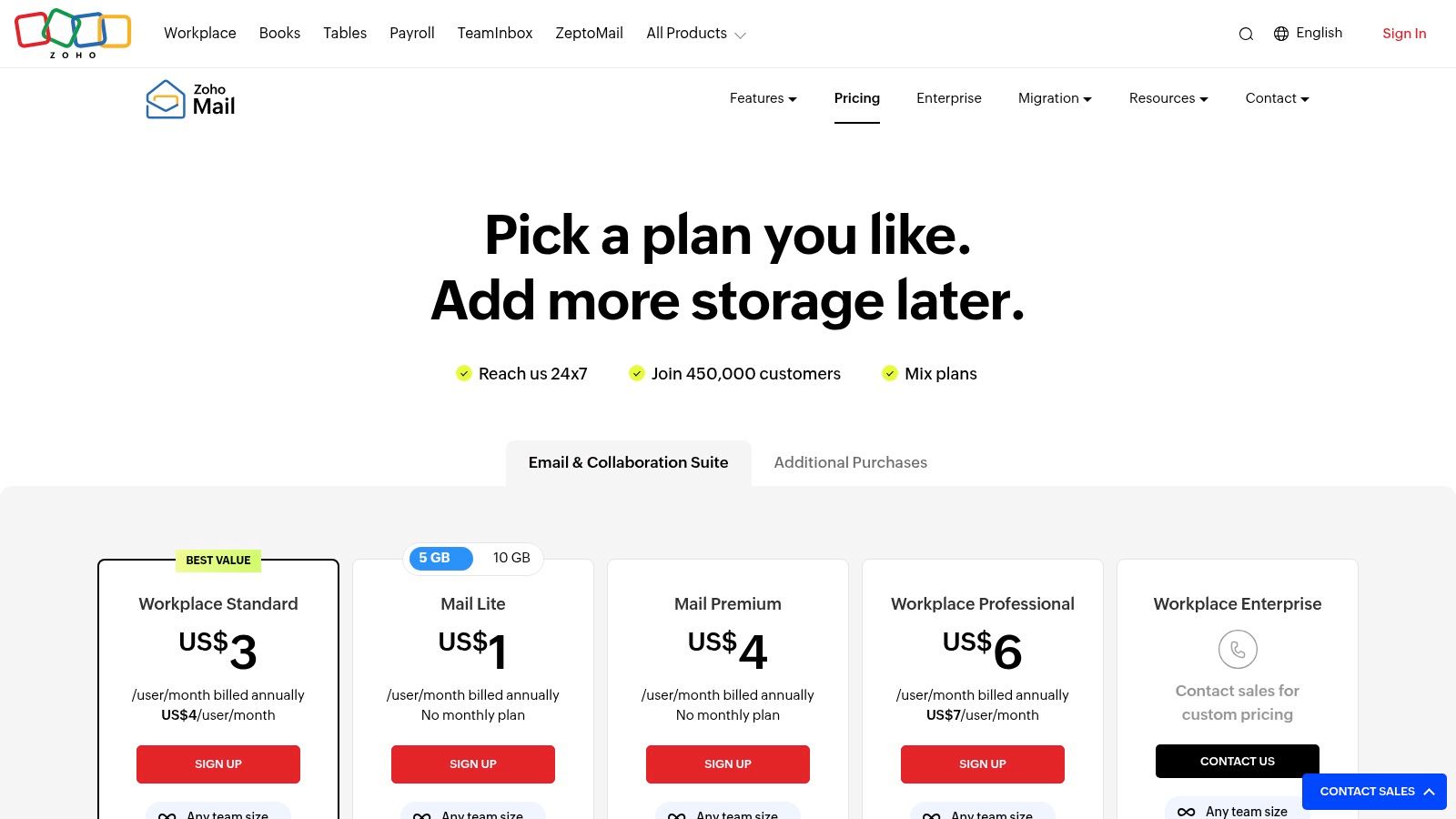
The platform’s key advantage is its value and focus on business security. Companies can opt for a Mail-only plan or upgrade to the full Zoho Workplace bundle, which includes document editors, spreadsheets, and cloud storage. Zoho is serious about privacy, operating a transparent, ad-free business model. The migration process is also well-supported, and you can review a complete migration guide to understand the steps involved in making a switch.
Key Details and Use Cases
Best For: Small to medium-sized businesses (SMBs) and start-ups looking for an affordable, integrated office suite with professional email hosting and strong security controls.
Standout Features: Extensive admin and security control panel, data retention policies, S/MIME encryption, and the ability to mix and match plans for different users within one organisation.
Pricing: A "Forever Free" plan for up to five users is available. Paid plans like Mail Lite are very competitively priced, starting around $1.25 CAD/user/month. Workplace bundles offer more tools for a slightly higher cost.
Migration: Zoho provides a one-click migration tool for importing email, contacts, and calendar data from sources like Gmail and Microsoft 365, backed by 24/7 support.
Limitation: The ecosystem of third-party integrations is smaller than Google's or Microsoft's, which could be a factor for businesses reliant on specific external applications.
Website: https://www.zoho.com/mail/pricing.html
11. Apple iCloud Mail (iCloud+)
For users deeply embedded in the Apple ecosystem, iCloud Mail presents a seamless and convenient alternative to Gmail. While the standard iCloud Mail is a basic offering, upgrading to any paid iCloud+ plan unlocks powerful features that elevate its privacy and security capabilities. It is designed to work flawlessly across iPhone, iPad, Mac, and even Windows via the iCloud for Windows app, offering a frictionless user experience on a trusted hosted platform.
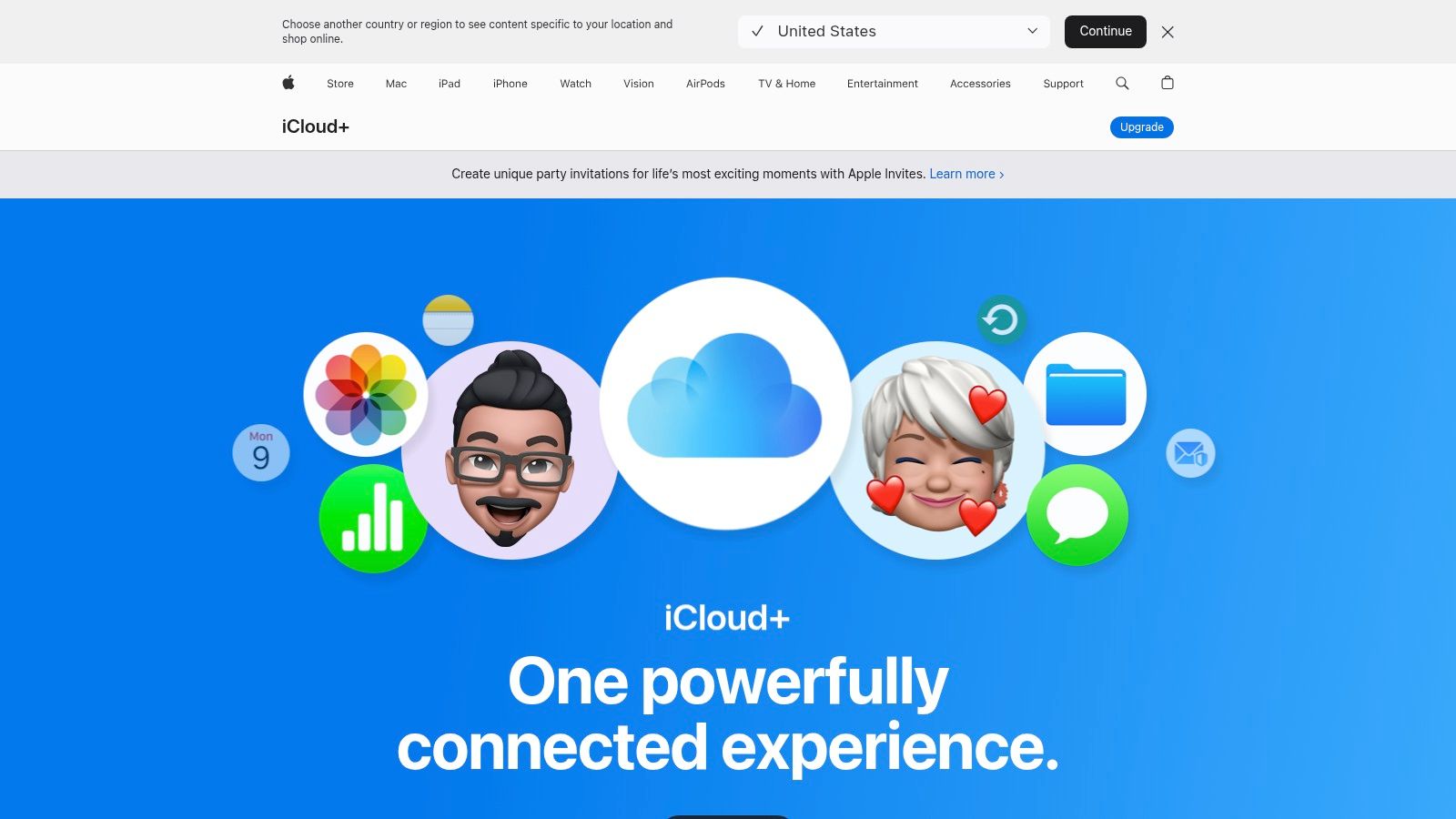
The primary appeal of iCloud+ for email is its focus on privacy. Features like Hide My Email allow you to generate unique, random email addresses for signing up to services, protecting your real address from spam and data breaches. Additionally, the ability to add a custom domain makes it a viable option for individuals or families who want a personalized email address without the complexity of traditional email hosting. Advanced Data Protection for iCloud can also provide end-to-end encryption for your mail.
Key Details and Use Cases
Best For: Individuals and families heavily invested in the Apple ecosystem seeking an easy-to-use, integrated, and private email solution.
Standout Features: Custom email domain support, Hide My Email for privacy, Private Relay (a VPN-like service for Safari), and optional end-to-end encryption.
Pricing: iCloud+ plans, which include these email features, start at $1.29 CAD/month for 50GB of storage. Higher tiers offer more storage and are shareable with family members.
Migration: Apple provides straightforward guides for migrating from other services. Setting up a custom domain is a guided process within iCloud settings, requiring you to update your domain's DNS records.
Limitation: The best user experience is undeniably on Apple hardware. While accessible on the web and through third-party clients, the mail features are more basic compared to power-user services like Proton Mail or Fastmail.
Website: https://www.apple.com/ca/icloud
12. HEY by Basecamp
HEY by Basecamp is a highly opinionated and redesigned email service that challenges traditional inbox conventions. Instead of being a simple Gmail clone, it’s one of the boldest alternatives to Gmail, focusing on workflow, privacy, and control. It fundamentally changes how you interact with email by introducing concepts like the "Imbox" (for important mail), "The Feed" (for newsletters), and "The Paper Trail" (for receipts), aiming to reduce clutter and stress.
Central to its philosophy is user privacy, with automatic blocking of spy pixels and tracking scripts that are common in marketing emails. The "Screener" feature is another powerful security tool, requiring you to approve or block new senders before they can enter your inbox, giving you complete control over who can contact you. This structured approach is ideal for individuals who feel overwhelmed by their current email setup and prioritize a clean, secure inbox above all else.
Key Details and Use Cases
Best For: Users overwhelmed by email who are open to a completely new workflow, individuals seeking strong default privacy, and teams using HEY for Domains.
Standout Features: The Screener for first-time senders, built-in spy pixel blocking, unique organisational workflows (Imbox, The Feed, The Paper Trail), and generous 100 GB storage per personal account.
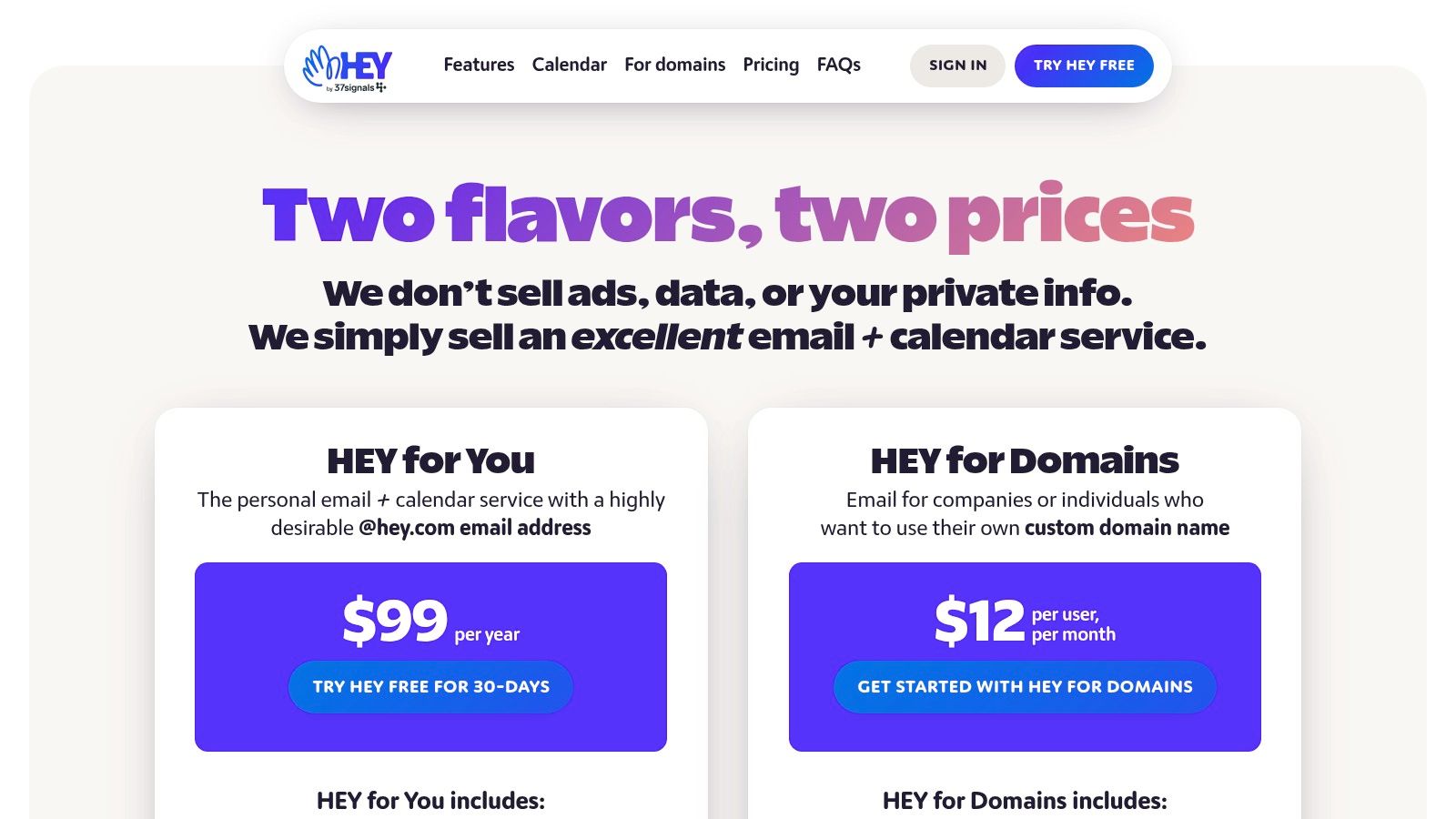
Pricing: Personal plans for an @hey.com address are billed annually at $99 USD. HEY for Domains, aimed at businesses, starts at $12 USD/user/month.
Migration: HEY intentionally does not offer an import tool for old emails, encouraging users to make a completely fresh start. You can, however, forward your old mail to your new HEY address.
Limitation: Its rigid, opinionated structure is not for everyone; users who prefer a traditional inbox with folders and custom filters may find it restrictive. The mandatory annual billing for personal accounts is another key consideration.
Website: https://www.hey.com/pricing/
Top 12 Gmail Alternatives — Features & Privacy
| Provider | Core features | Security & USP ( ) ) |
UX & Rating (★) | Target audience ( ) ) |
Pricing & Value ( ) ) |
|---|---|---|---|---|---|
Typewire  |
Ad‑free encrypted email, aliases, smart anti‑spam, full‑text search, mobile apps | Zero‑access + E2E, Vancouver data‑center (PIPEDA), privately owned infra |
★★★★★ responsive apps, fast deliverability | Privacy‑conscious individuals, SMBs, IT/security teams |
7‑day trial; low‑cost starter → premium tiers; subscription, refundable guarantees |
| Proton Mail | End‑to‑end mail, custom domains, Bridge, bundled services (VPN/Drive/Calendar) | Swiss jurisdiction, open‑source clients, zero‑access model |
★★★★☆ mature apps, multi‑service ecosystem | Privacy users, families, SMBs |
Freemium + paid tiers; generally higher priced than single‑purpose |
| Tuta (Tutanota) | Mailbox‑wide E2E, calendar, native apps, offline mode, 2FA | Germany jurisdiction, post‑quantum roadmap, minimal telemetry |
★★★★☆ simple, secure native apps | Users wanting all‑in‑one encrypted mail |
Freemium + paid plans; generous storage on paid tiers |
| Fastmail | Custom domains, aliases, catch‑all, excellent IMAP/CardDAV/CalDAV, fast search | Standards‑focused; not E2E at rest |
★★★★★ very fast, powerful inbox tooling | Users valuing speed, IMAP compatibility & classic clients |
Paid tiers; 30‑day trial; no permanent free tier |
| StartMail | Unlimited disposable aliases, PGP support, custom domains | Strong aliasing & simple PGP to external recipients |
★★★★☆ easy setup, effective spam control | Users needing alias privacy and spam control |
Paid plans; 7‑day trial; best value with annual billing |
| mailbox.org | Email, calendar, drive, video meetings; tiered plans | Berlin hosting, GDPR‑strong, many aliases (up to 250) |
★★★☆☆ utilitarian UI but comprehensive features | Individuals & SMBs wanting EU groupware |
Competitive groupware pricing; 30‑day trial |
| Posteo | Minimalist email, encrypted storage, calendars, contacts | Anonymous signup/payment, green energy operations |
★★★★☆ simple, privacy‑first experience | Cost‑conscious privacy users |
€1/month base + à‑la‑carte upgrades; no free tier |
| Mailfence | OpenPGP, digital signing, team admin, custom domains | Belgium jurisdiction, GDPR alignment, rich crypto options |
★★★☆☆ utilitarian but feature‑rich | Teams needing crypto + admin/compliance tools |
Tiered, budget‑friendly plans for teams |
| Microsoft Outlook / 365 | Free Outlook.com; Exchange, Teams, Office apps, enterprise tools | Enterprise‑grade deliverability & controls; less privacy‑centric telemetry |
★★★★☆ familiar, reliable apps at scale | Enterprises & Microsoft‑standardized SMBs |
Free personal tier; paid 365 plans (CAD pricing available) |
| Zoho Mail / Workplace | Mail Lite/Premium, Workplace bundles (Docs, Drive, Meetings) | Cost‑effective business suite; not E2E |
★★★★☆ mature admin tools and integrations | SMBs wanting integrated, low‑cost collaboration |
Very competitive per‑user pricing; flexible mixing of plans |
| Apple iCloud Mail (iCloud+) | Custom domains, Hide My Email, Private Relay, Family Sharing | Apple privacy features; best with Apple ecosystem |
★★★★☆ seamless for Apple users | Apple users & families |
Tiered iCloud+ storage (CAD pricing); Family options |
| HEY by Basecamp | Pixel blocking, Screener triage, newsletter management, 100 GB | Opinionated workflow with strong default privacy |
★★★★☆ clean, unified experience; unique triage model | Users open to HEY workflow; teams via HEY for Domains |
Paid (annual focus), USD billing on some plans; no old‑mail import |
Take Back Control: Your Next Step Towards a Private Inbox
Moving away from the Google ecosystem represents a fundamental shift in how you manage your digital identity. As we have explored, the landscape of alternatives to Gmail is vast and varied, offering robust solutions tailored to different needs. The journey from a 'free' service funded by data collection to a premium, privacy-first hosted email platform is a conscious decision to reclaim control over your personal and professional communications.
This guide has demonstrated that you do not have to sacrifice functionality for security. Providers like Proton Mail and Tuta offer end-to-end encryption by default, making them fortresses for sensitive information. Meanwhile, services such as Fastmail and Zoho Mail provide a familiar, feature-rich experience that rivals Gmail's usability, but with a firm commitment to keeping your data private and your inbox ad-free.
Making the Right Choice for Your Needs
Choosing the best email service is not about finding a one-size-fits-all solution; it is about aligning a provider’s strengths with your specific requirements. To make a confident decision, consider these key factors:
For the Privacy Advocate: If your primary goal is absolute confidentiality and anonymity, look to providers with strong, independently audited end-to-end encryption and a zero-knowledge policy. Hosted email services like Proton Mail, Tuta, and Typewire are engineered from the ground up to ensure no one, not even the company, can read your emails.
For the Small Business Owner: A small to medium-sized business needs professional features like custom domains, shared mailboxes, and robust security controls. Look for hosted email platforms like Zoho Mail, Mailfence, or Microsoft 365 that offer a comprehensive suite of tools built for collaboration and business security, often with data centers located in regions with strong privacy laws, including Canada.
For the Pragmatic User: If you simply want a high-quality, ad-free email experience without deep-diving into complex encryption protocols, services like Fastmail and HEY offer incredible user interfaces, powerful organisational tools, and a clear, transparent business model that respects your privacy.
Your Migration Action Plan
Once you have selected a new provider, the migration process can feel daunting, but a structured approach makes it manageable. Start by creating your new account and setting up any custom domains. Use the provider’s built-in import tools to transfer your old emails, contacts, and calendar events.
Next, update your new email address on all essential online accounts, such as banking, social media, and government services. For a smoother transition, set up an auto-forwarder on your Gmail account to your new address for a few months to catch any stray messages. Beyond choosing a secure provider, optimizing your email workflow can significantly enhance your experience; for instance, learn to streamline your communication by leveraging tools that help you understand how marketers write faster emails using voice typing.
Ultimately, switching from Gmail is a powerful statement. It signifies that you value your privacy, respect your clients' data, and demand a higher standard for your digital communications. The tools and platforms detailed in this article provide a clear path forward. Your ideal private inbox is no longer a niche concept but an accessible and achievable reality.
Ready to make the switch to an email service that prioritises your privacy without compromise? Typewire offers end-to-end encryption, secure Canadian hosting, and a seamless user experience designed for individuals and businesses who demand confidentiality. Take the first step towards a more secure digital life by exploring Typewire today.
The post Top 12 Secure Alternatives to Gmail for Privacy in 2026 appeared first on Typewire.
Top 12 Secure Alternatives to Gmail for Privacy in 2026
Posted: 2026-01-31
Email Bounce Explained: Soft vs Hard Bounces & How to Fix Them
Posted: 2026-10-02
Which Secure Email Provider Fits Your Workflow? 10 Options by Use Case
Posted: 2026-09-29
Personal Data Privacy: Why Your Email Is the Master Key to Your Digital Life
Posted: 2026-09-24
Secure Email Gateway Guide: Do You Need One?
Posted: 2026-09-23
Average Email Deliverability Rate: 2026 Benchmarks
Posted: 2026-09-18
Phishing vs Spam: What’s the Difference?
Posted: 2026-09-15
PIPEDA vs GDPR Key Differences for Businesses
Posted: 2026-09-11
CASL Express vs Implied Consent: What’s the Difference?
Posted: 2026-09-08